
Piece Five: How to Enter Flow State on Command
[ 9 ]
You have experienced it before. A state of total immersion where the external world dissolves, time distorts, and your entire being is focused on the task at hand. Hours feel like minutes. Action and awareness merge into a seamless, effortless dance. Performance soars beyond its normal limitations.
Athletes call this being "in the zone." Artists and engineers lose themselves in their craft, surfacing days later with breakthroughs. This is the state of flow, the most potent and productive state of human consciousness. Imagine possessing the ability to command this state at will. The progress you could achieve in any endeavor would be limitless.
In a world engineered for distraction, with its endless notifications and fragmented attention, achieving such deep focus seems almost mythical. Yet flow is not a gift reserved for the chosen few. It is a natural neurological condition that can be systematically triggered by creating the precise environment for it to emerge.
When you enter flow, your brain operates differently. Your sense of self recedes, quieting the inner critic. Your intuition sharpens, allowing you to make faster, more accurate connections. It is in this state that Leonardo da Vinci would stand before "The Last Supper" for hours, completely absorbed, adding only a few perfect strokes. It is how Michael Jordan, while battling a severe illness in the 1997 NBA Finals, could score thirty eight points to win the championship, later recalling almost none of it. His consciousness had fused completely with his actions.
As researchers like Steven Kotler have discovered, flow follows a predictable, triggerable pattern. To access this extraordinary state of peak performance, you must first understand its catalysts and then fiercely protect your attention from the relentless siege of modern life.
Step One: The Catalyst of Urgency
Consider the power of urgency, illustrated by a common experience. You are in school, and it suddenly dawns on you: a critical homework assignment is due next period. In the precious ten minutes of the break, a profound shift occurs. The noisy hallway and other suboptimal conditions dissolve into irrelevance. Distractions vanish.
In this compressed timeframe, you enter a state of intense focus. The goal is singular: completion. The paralysis of perfectionism disappears, replaced by decisive action. An assignment that might normally take forty five minutes is finished in ten. While the final product may lack some refinement, it is complete. Often, it is more than good enough. As chef Marco Pierre White stated, "Perfection is a lot of little things done right." Consistent, solid effort across all parts of a project yields a better result than obsessive focus on one part at the expense of others.
This scenario reveals a fundamental truth about flow. Urgency creates the ideal conditions for its emergence by clarifying goals, intensifying focus, and forcing progress over perfection. It is a potent catalyst.
Step Two: Erecting Your Fortress of Focus
Focus is the gateway to flow. It is the ability to direct your attention to a single task while filtering out all competing stimuli. Without it, performance suffers, tasks expand to fill all available time, and frustration mounts. The problem is that your focus is a valuable asset, and everyone wants a piece of it. Tech companies engineer algorithms to hijack it; the daily barrage of news and notifications steals it in fragments. Therefore, your next step is to build a fortress to protect it.
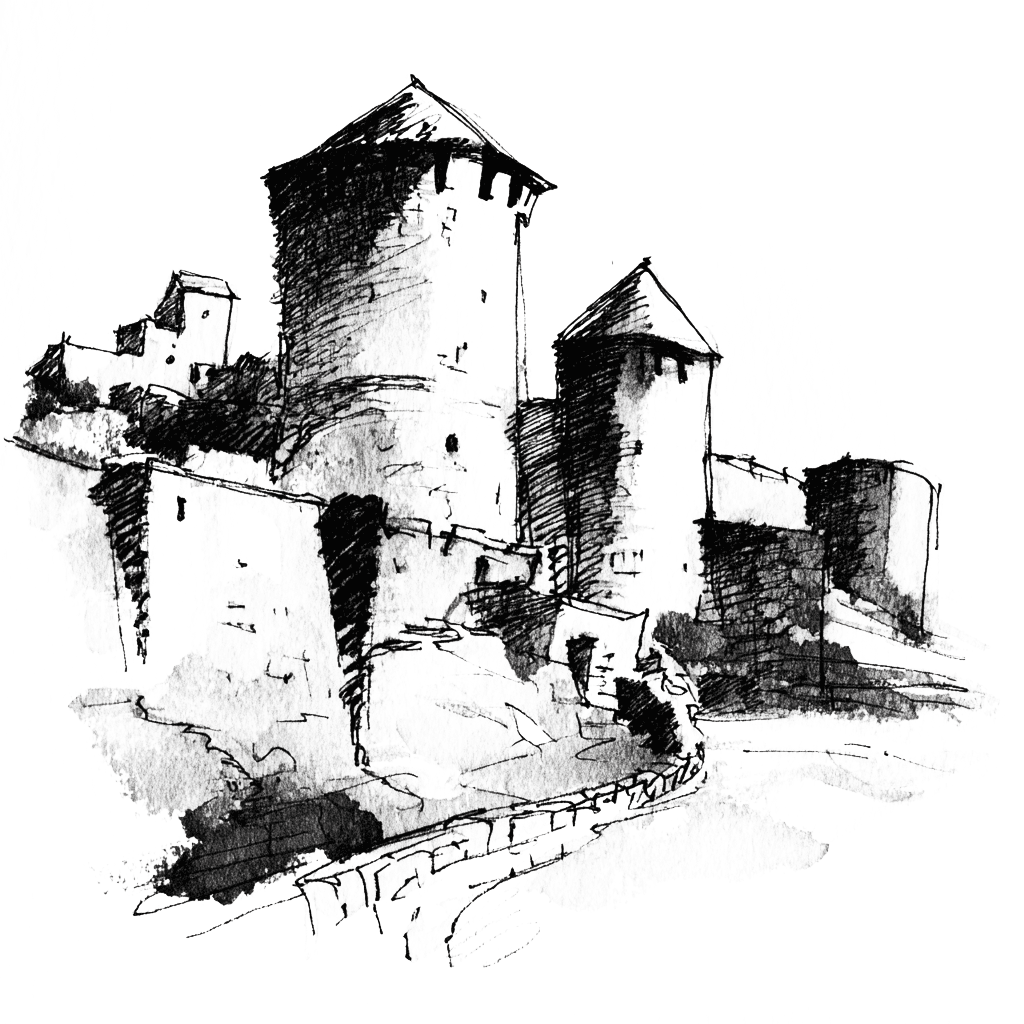
Think of your attention as a medieval fortress safeguarding your ability to perform deep, meaningful work. This fortress requires multiple layers of defense.
The First Layer: Your Physical Environment. This is your castle’s moat. Find a quiet space or use noise canceling technology. Remove your phone from your line of sight. Have direct conversations with potential interrupters about your need for focused time. If possible, work in an environment dedicated solely to deep work.
The Second Layer: Your Digital Defenses. These are your castle's walls and towers. Turn off all notifications on your devices. Employ website blockers during work sessions. Maintain only the essential browser tabs required for the immediate task.
The Final Layer: Your Mental Sanctum. This is the keep, the innermost chamber where the real work occurs. Establish a clear starting ritual to signal to your brain that it is time for deep work. Keep a "distraction pad" nearby; when intrusive thoughts arise, write them down quickly and return to your task. Maintain a crystal clear focus on your single objective. Multitasking is the enemy of depth.
Research by neuroscientist Dr. Daniel Levitin shows that every additional sensory input, even background music with lyrics, consumes mental resources that inhibit our deepest state of focus. Begin your work sessions with minimal stimulation. If you require background sound, choose instrumental music or white noise. Like any skill, working without constant stimulation requires practice. Your brain, accustomed to frequent dopamine hits, may initially resist this focused quietude.
Step Three: The 12 Minute Focus Ritual
Before you can command flow, you must train your attention. The research of Dr. Amishi Jha reveals two distinct attention systems in the brain. The first she compares to a flashlight: a narrow, focused beam that illuminates one area with crisp, clear detail. The second is like a floodlight: broad, diffuse, and receptive, taking in the entire environment without privileging any single element.
The 12 Minute Focus Ritual is a mental warm up designed to bridge the gap between your normal, distracted state and deep focus. This ritual serves several crucial purposes. It acts as a psychological trigger, creating a boundary between distraction and performance. It calms your nervous system, reducing stress hormones that interfere with focus. Most importantly, it trains your ability to consciously control both the "flashlight" and "floodlight" systems of your brain.
Minutes 1-4: Prepare your attention systems.
Minutes 4-8: Develop your "flashlight" focus.
Minutes 8-12: Practice the full attention cycle.
[A detailed, guided version of this ritual, including an audio companion, is available at the end of this guide.]
This ability to consciously switch between modes is the key to sustainable deep work. You use your "flashlight" for intense focus on the task. During breaks, you switch to "floodlight" mode, allowing your mind to roam and recharge. Upon returning to work, you consciously narrow the beam back to your flashlight.
Mastering Your Focus Muscle
You would not attempt a marathon without training. Similarly, the ability to focus deeply is a muscle that must be developed. Start with shorter sessions that challenge but do not overwhelm you. Each time you notice your mind wandering and gently guide it back to your task, you are performing a repetition, strengthening your focus.
Progress is not linear; some days will be easier than others. This is normal. The goal is consistency in practice, not perfection in every performance. Ultimately, the objective is not to become a robot, but to develop mastery over your own mind. This allows you to focus deeply when it matters most, enabling you to accomplish more in less time and liberating your energy for the people and pursuits that give your life meaning.
[You will find the "Deep Work Protocol" cheat sheet at the end of this guide. It is a valuable resource containing all the actionable steps to create the perfect conditions for entering a flow state.]